
The Practicum Site Crisis Nobody's Talking About

I’ve been getting a lot of emails lately.
Every week, it seems, another university counseling program is reaching out to California Family Institute asking if we can take their students for practicum (training). The tone has shifted, there’s an urgency now that wasn’t there even two years ago. Programs that used to have waiting lists of sites are scrambling to place students. Some getting creative with hybrid arrangements, remote supervision, anything to get their students the required hours. This problem doesn’t seem to be just happening in the States. In Stephen Madigan’s most recent newsletter he wrote that The Province of Ontario Canada has plans in the works to lower training requirements for psychologists. The plan is to reduce the required amount of supervised work for registrants without doctoral-level training to 12 months from four years. Other changes include the discontinuation of an oral exam.
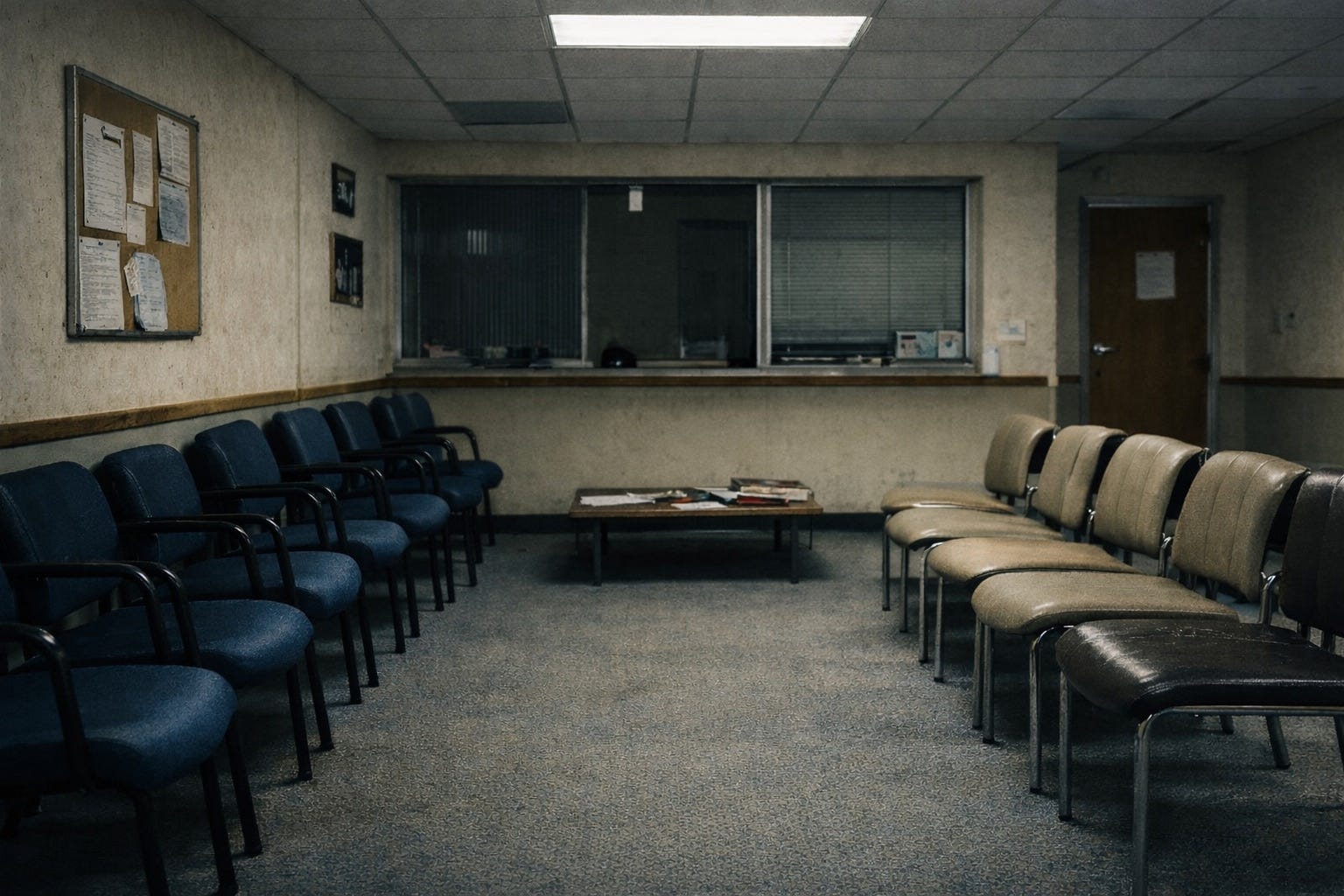
At first, I thought it was just us, that maybe CFI developed a reputation, or someone had put us on a list. But then I started talking to colleagues who run other community centers, group practices, nonprofit agencies. They’re all getting the same flood of requests. And here’s what’s interesting, most of them are saying no. Not because they don’t want to support the next generation of therapists. But because they literally cannot afford to and because of AI and tech platforms, there’s a serious reduction of referrals.
The Math That Doesn’t Math
Let’s talk about what’s actually happening here. The Bureau of Labor Statistics projects that employment for mental health counselors will grow 17% from 2024 to 2034, about six times faster than the average for all occupations. The field knows this. Universities have responded by expanding their counseling programs, adding online options, dropping GRE requirements to boost enrollment. We’re producing more graduate students in mental health counseling than ever before.
Meanwhile, the infrastructure that trains those students is collapsing.
In January 2026, the Trump administration sent termination letters to hundreds of organizations, cutting nearly $2 billion in mental health and addiction services grants. They reversed it within 24 hours after bipartisan pushback, but the damage was done. Not just the whiplash of watching funding disappear and reappear, but the message it sent, this is not stable ground.
Many health clinics closed their doors. The cuts were technically restored, but organizations know what’s coming. They’re already operating in survival mode, trying to figure out how to maintain basic services with Medicaid cuts, insurance reimbursement rates that average 22% lower than medical visits, and an administrative chaos that makes long-term planning impossible.
And in survival mode, you stop taking students.
The Brutal Logic of the Training Ecology
Here’s what nobody wants to say out loud, training the next generation of therapists is expensive, time-consuming, and often thankless work. A practicum student needs more 200 hours of supervised experience. That’s not just warm bodies in the room, that’s licensed clinicians spending billable hours in supervision, reviewing recordings, providing feedback, managing crises when students get stuck. It’s administrative staff processing background checks, tracking hours, managing university relationships. It’s liability insurance, training in your clinical model, emotional labor when students have breakdowns about whether they’re cut out for this work. When you’re flush with funding, when your organization is stable and growing, when you have senior clinicians with space in their schedules, you can absorb this. You should absorb this. It’s part of being a good citizen in the field.
But when you’re facing funding cuts, when you’re already short-staffed, when you’re trying to figure out how to keep the lights on? Training becomes a luxury you can’t afford. Even if you desperately want to. The universities keep churning out students because their funding model is different, tuition revenue, enrollment targets, accreditation standards that require certain throughput. The incentive structures are completely misaligned. Higher education gets paid to produce graduates. Community mental health gets paid (barely) to provide services. Nobody gets paid to train the next generation. So we’re creating a bottleneck. More students, fewer sites, increasing desperation on both sides.
The Question Nobody’s Asking
But here’s what interests me, What kind of therapists are we training when the training infrastructure is collapsing? This isn’t just a logistical problem. It’s not just about finding enough sites to check boxes and accumulate hours. The practicum experience is where students learn what it actually means to be a therapist. Where they encounter the gap between theory and practice. Where they discover whether they can sit with someone else’s pain without needing to fix it, whether they can hold complexity, whether they can work within systems that are broken and still find ways to be useful.
And increasingly, that training is happening in... private practices. Boutique therapy centers. Settings where the clients have good insurance, where the work is 50-minute sessions, where the clinical model is individual psychotherapy for people who already have significant resources.
Don’t get me wrong, that work matters. But it’s not the work most of our graduates will do. Most will end up in community mental health, working with Medicaid clients, managing impossible caseloads, navigating systems that are designed to deny care. They’ll work with people experiencing a range of challenges including homelessness, suicidality, the aftermath of state violence. They’ll learn to do therapy in parking lots (my best training experience), on Zoom, and maybe even in the park.
When we lose community mental health as a training ground, we lose something more than placement sites. We lose a way of imagining what therapy can be. We lose the practitioners who know how to work at the intersection of individual suffering and structural violence. We lose the lineage.
I know what you’re thinking. “But Chris, haven’t you spent years critiquing the gatekeeping in therapy? The credentialing cartels? The way professional barriers keep out the very communities most impacted by structural violence?” Yes. Absolutely. And I stand by every word. But here’s the thing, lowering training requirements because we’ve systematically defunded the infrastructure that makes good training possible isn’t democratization. It’s collapse masquerading as access.
When training requirements drop not because we’ve figured out better ways to prepare practitioners but because we can’t maintain the systems we have, what fills that void? Pop psychology. TikTok influencers, and the multi-level-marketing machinery of therapy training certificates, (yes, I’m looking directly at you, EMDR, with your tiered certification schemes and your armies of trainers selling workshops like Tupperware parties.)
We’re not removing barriers to create space for community-based healing traditions or peer support models or the kind of robust apprenticeship that happens outside credentialing systems. We’re creating a vacuum that gets filled by whatever can scale fastest and extract profit most efficiently. The difference between opposing professional gatekeeping and opposing the collapse of training infrastructure is the difference between tearing down a wall and watching a building rot from the inside. One is intentional. The other is entropy. And they don’t lead to the same place.
Cultural Architecture at the System Level
As you know, I’ve been thinking a lot lately about what I call “cultural architecture” the way we build the structures that shape possibility. Not just responding to what is but designing for what could be. And the practicum crisis is a masterclass in how not to do this.
We’re training therapists for a mental health system that we’re simultaneously defunding. We’re expanding graduate programs while contracting the infrastructure that makes those programs viable. We’re responding to genuine need (there is a mental health workforce crisis) with solutions that can’t be sustained by the ecology we’ve created. It’s like planting more seeds while poisoning the soil.
The Trump regime’s chaos is just making visible what’s been true for a long time, we’ve never actually valued community mental health enough to fund it adequately. The sector has always run on mission-driven people willing to work for less, on grants that come and go, on the hope that maybe this time we’ll get it right. Now we’re asking that same fragile system to train the next generation. For free. While cutting their funding. While destabilizing their operations. While offering them nothing in return except the warm glow of knowing they’re supporting the profession.
What Gets Built From Here
So what do we do?
I don’t have a neat answer. But I think we start by refusing the logic that got us here. The assumption that training is something we do “on the side,” that community mental health centers should just absorb the costs because it’s the right thing to do, that we can keep expanding enrollment without investing in the infrastructure that makes training possible.
Some ideas worth considering:
University partnerships that actually partner. Throw some of that ever-increasing tuition toward the practicum sites that are supporting your students. That means real investment in training sites. Adjunct faculty appointments for supervisors and post-grads. Recognition that universities benefit massively from community sites doing the work of training their students.
Rethinking the training model entirely. What if we designed training for the actual conditions of contemporary practice instead of a model built for a different era? I mean at this point grad programs should be teaching how to be in front of a camera, how to dance in front of a camera, how to do instant psychology and instant sociology in front of a camera, and how to shit on other therapists from your moral hilltop on camera, because we would rather eat each other for the gram, than work toward real change for those we help. I’m kidding. And I’m not kidding.
Political organizing. This is a policy problem, not a personal one. Individual community centers being more generous won’t solve this. We need advocacy, coalition building, sustained pressure on legislators to fund mental health training as infrastructure, not charity.
I think we need to tell the truth about what’s happening. That the next generation of therapists is being trained in a fundamentally different ecology than previous generations. Grad programs are slow to catch up. This will shape what therapy becomes.
The Dangerous Story We’re Not Telling
The dangerous story here is that maybe this crisis is revealing something we’ve been avoiding. Maybe we’ve been kidding ourselves that we have a sustainable model for training therapists. Maybe the whole thing has always depended on exploitation, of community mental health workers, of students, of clients in under-resourced settings. Maybe the practicum crisis isn’t a bug but a feature of a system that has never actually reconciled its aspirations with its economics. Maybe, just maybe, the collapse forces us to build something different. Not better necessarily. Not more just or equitable by default. But different. And in that difference, in that moment of not-knowing, there might be possibility.
We’re touching this crisis whether we want to or not. The question is what we’ll build from what’s changing.
Peace.
Thank you for writing this piece. I recently started my practicum in counseling. Our university requires we find our own site. I was very surprised to discover the low number of call backs and non-responses to my emails and resume especially from community mental health and hospitals. My classmates found it difficult and frustrating as well. It is not easy finding a site on your own to ask someone to put such a strong amount of time, energy, and resources into someone they do not know. I was fortunate and was given an opportunity from a private practice site and my supervisor is incredibly helpful, supportive, and professional. I realize those of us wanting to be counselors and therapists are not that lucky. I really hope things change, because my institution is accepting new students every semester, and we indeed need those quality supervision hours/internship experiences in order to graduate and go onto become therapists.
I wish all legislators could read this article. The architecture needs a fix. We are in a mental health crisis that affects all of society.