
Beyond Community (Again)
A few reflections from the Co-Creating Social Worlds Symposium at the Taos Institute and Mercy University

A couple of years ago I posted a quote from the Critical Art Ensemble on the Radical Therapist Instagram page:
“The idea of community is without doubt the liberal equivalent of the conservative notion of ‘family values’ — neither exists in contemporary culture, and both are grounded in political fantasy.”
It struck a nerve. People agreed, pushed back. What it named, I think, was a tension many of us are carrying but haven’t quite found the language for and, how can we be critical of community when so many people are suffering from its absence?
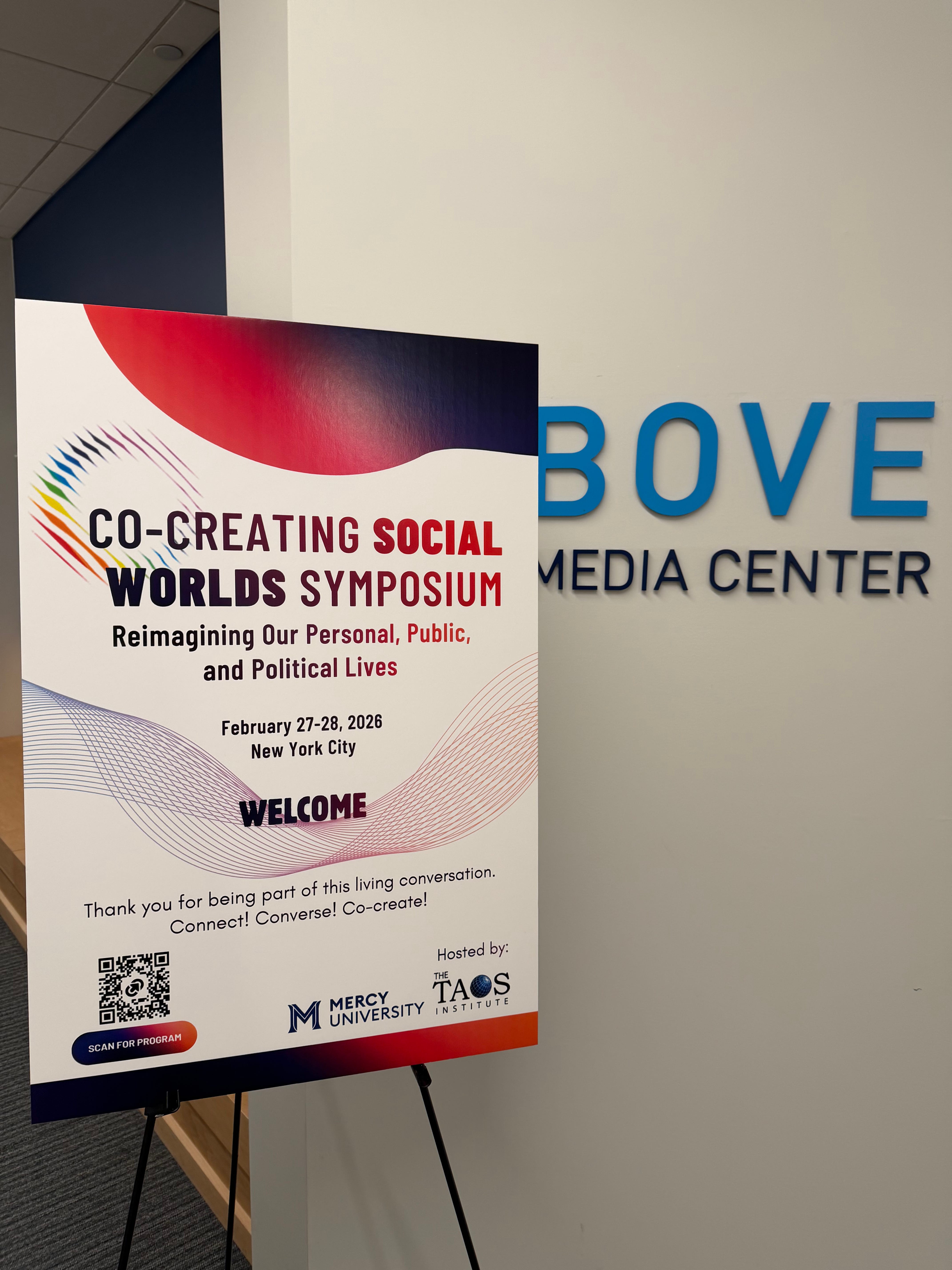
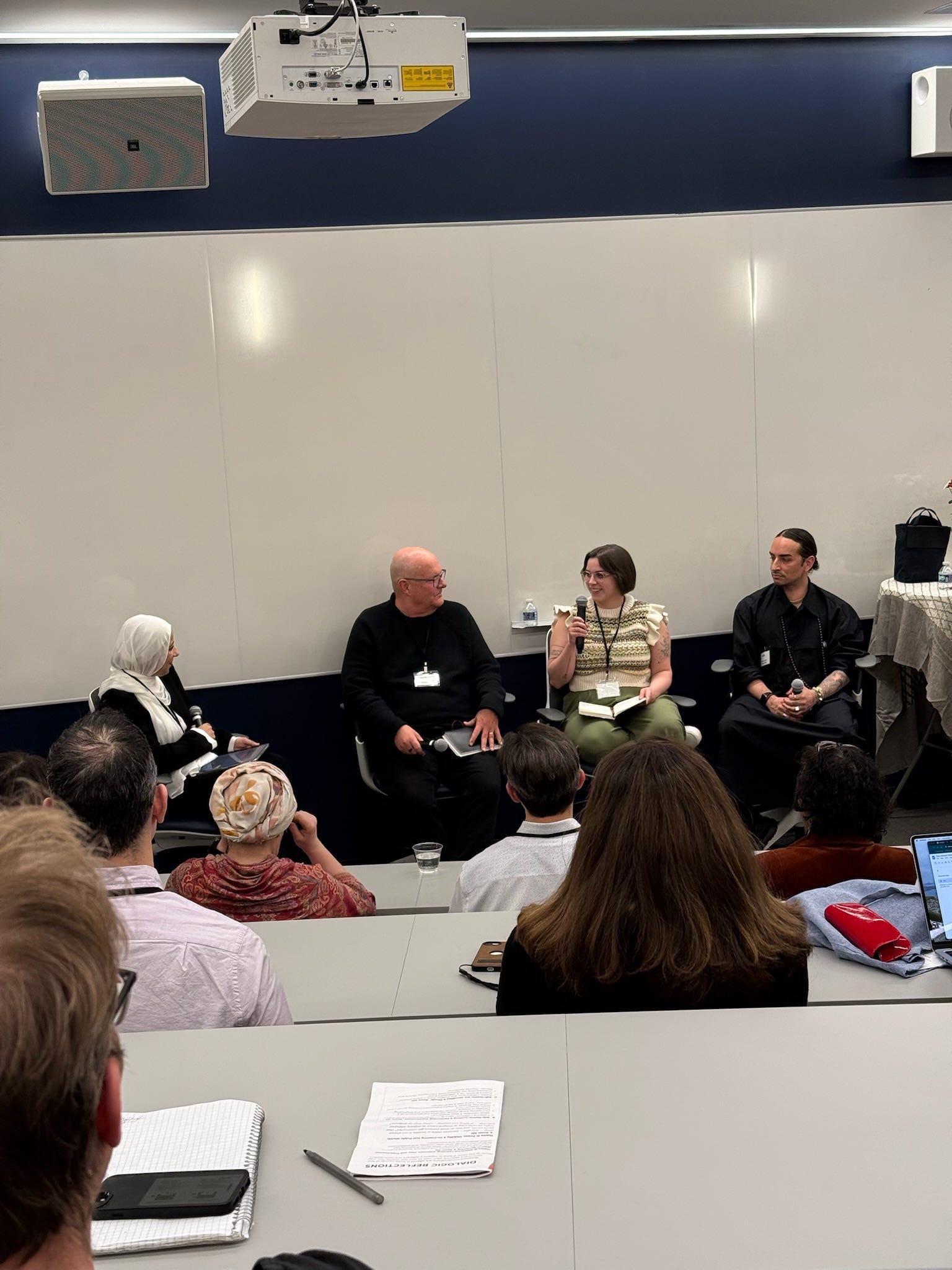
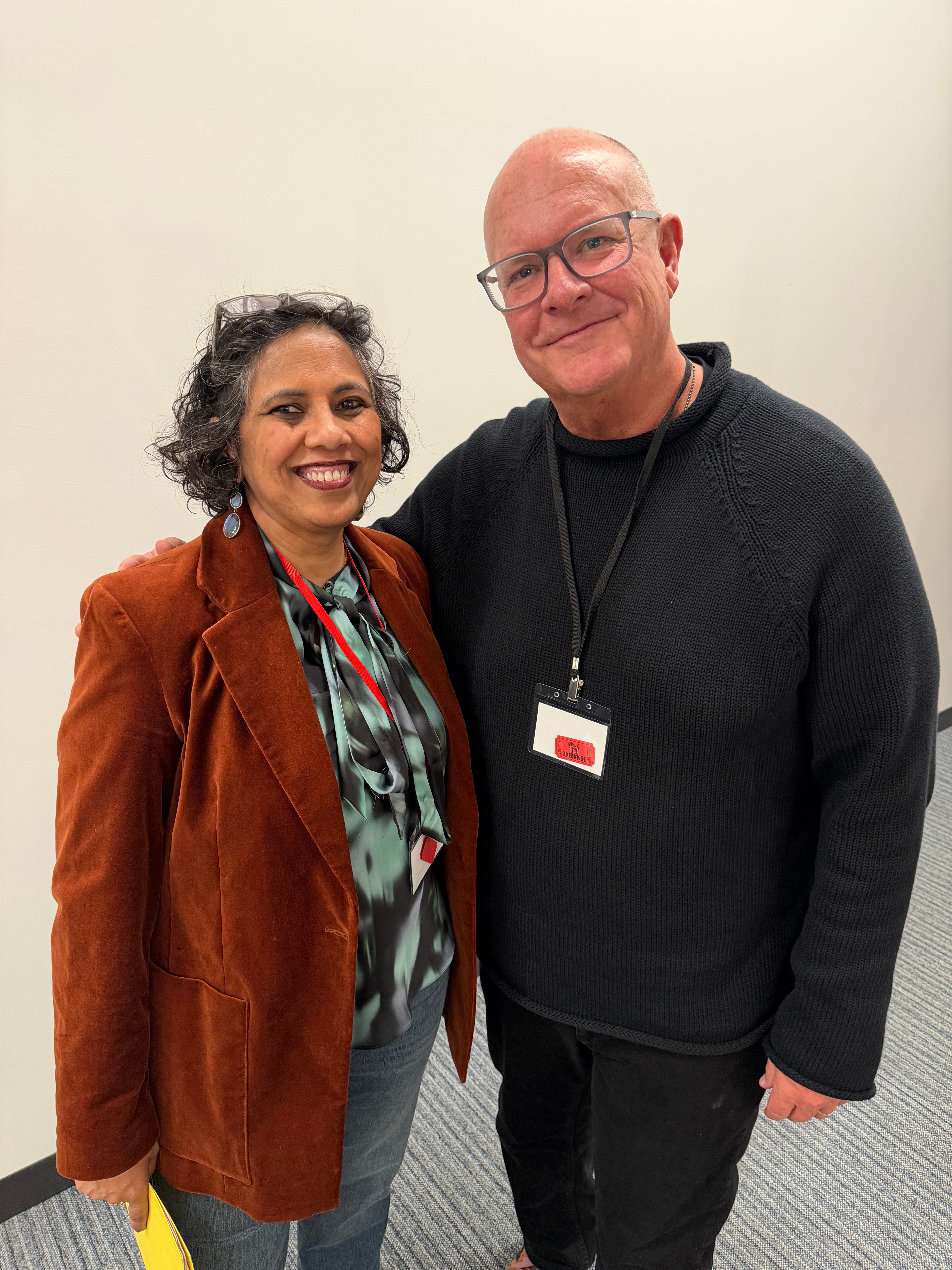
That tension brought me to a panel at the hosted by the Taos Institute and Mercy University, a conversation about togetherness, belonging, and what it actually takes to be with each other across difference and power. I want to share some of what I’ve been thinking, for those who weren’t in the room.
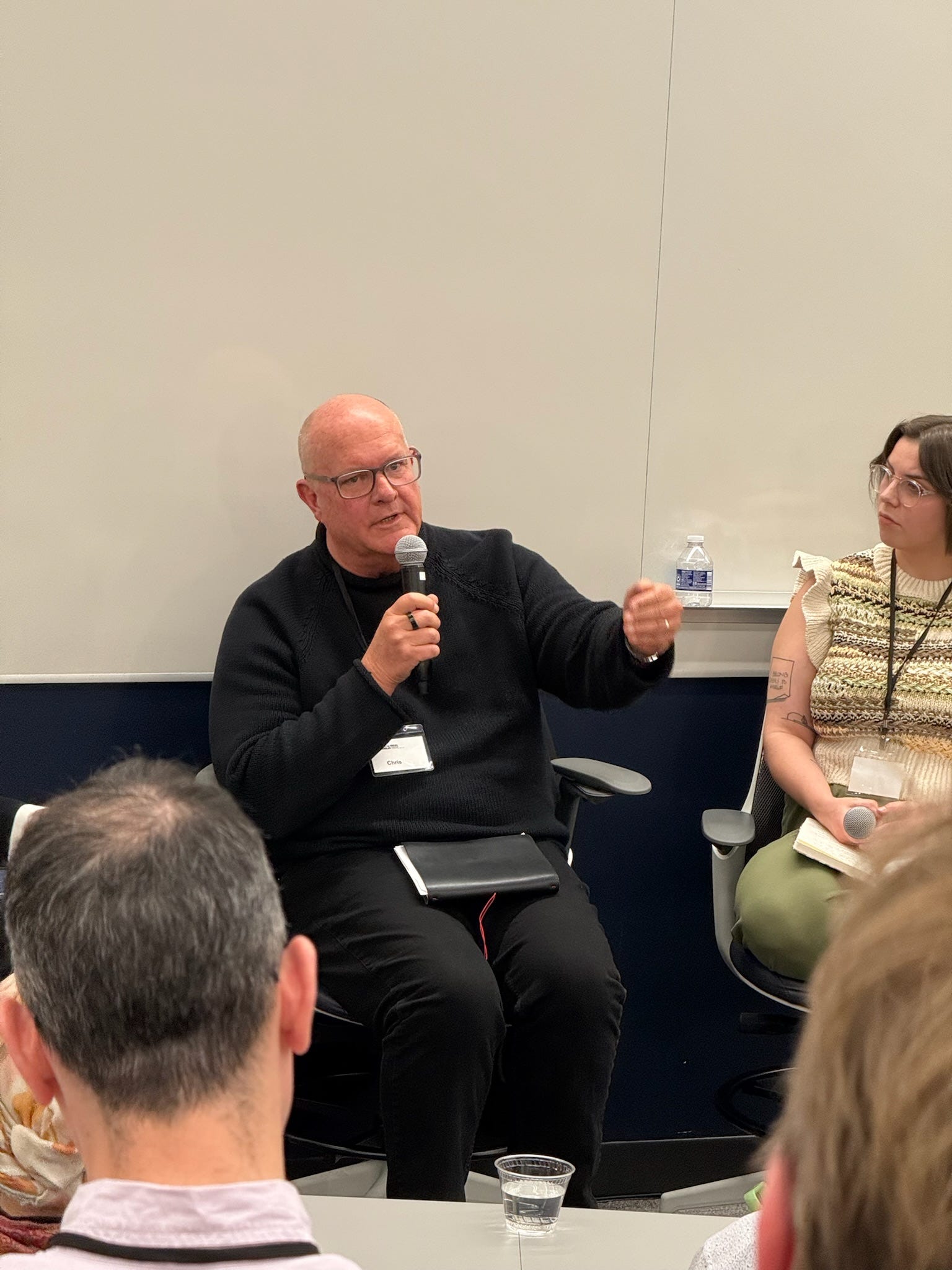
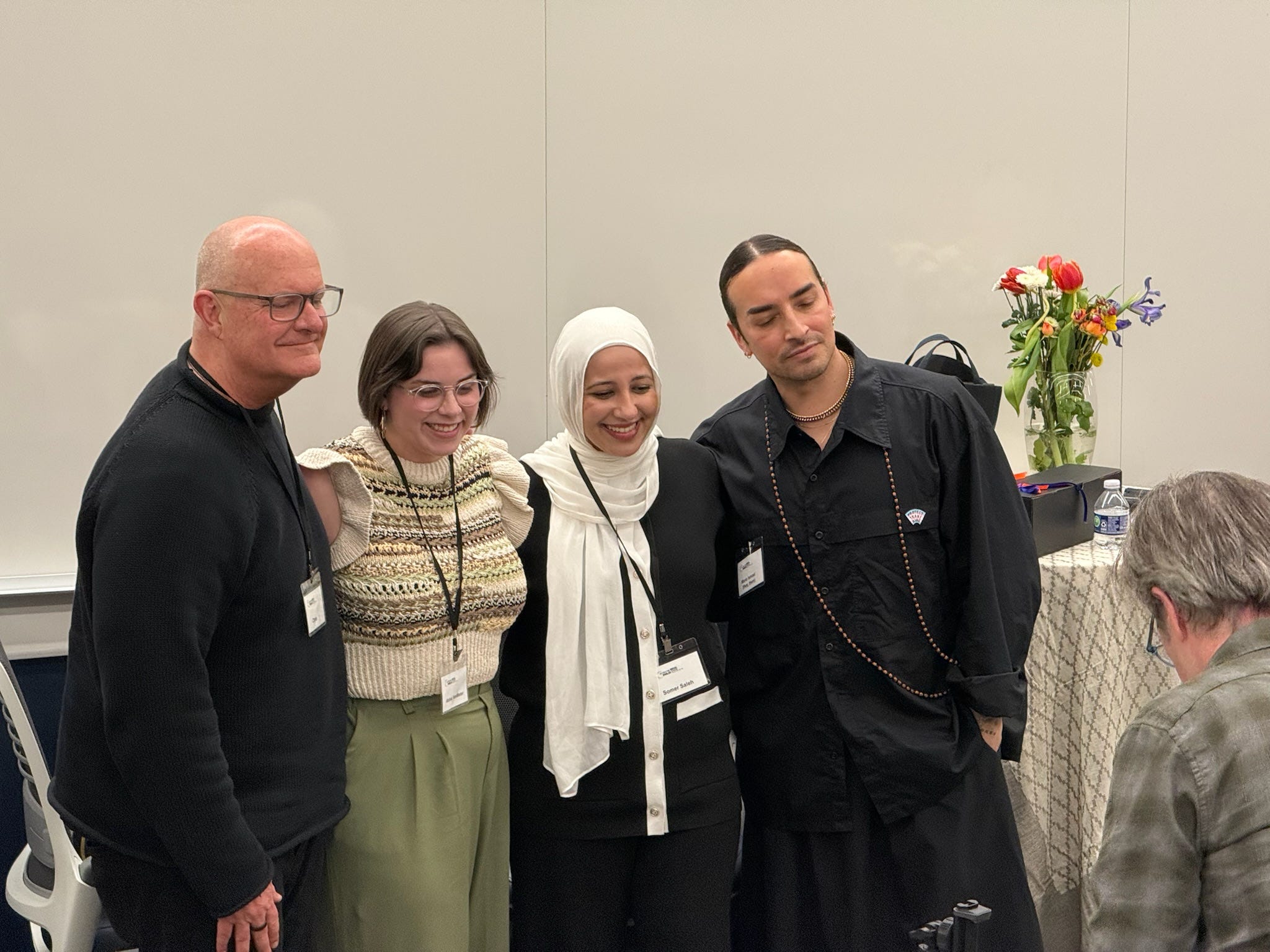
First I have to say I had a genuinely great time. There’s something about being in a room with people who have spent their lives thinking seriously about relationship, dialogue, and what it means to co-create worlds together that makes you feel like the right conversation is finally happening. I got to be alongside some of my absolute favorites, Saliha Bava, Ken Gergen, Harlene Anderson, and Sheila McNamee, people whose thinking has shaped mine in ways I’m still discovering. The conversations in the hallways, over meals, in the in-between spaces of the schedule were as rich as anything on the stage. Maybe richer. That’s usually how it goes.
The Problem With Community
Let me start by saying something potentially unpopular, I think the word community is doing a lot of work it can’t actually do. Community, as it’s usually invoked, promises warmth. Shared language. Mutual recognition. A place where you are known and held. And sometimes, genuinely, beautifully, it delivers that. I don’t want to dismiss it.
But community has challenges. When it gets idealized, it becomes a gatekeeping structure. It starts asking, Are you enough like us? Do you share our values, our language, our wound, our politics? Have you earned your place here? The more tightly a community holds its identity, the more it tends to surveil the borders of belonging. Arturo Escobar calls this one-world worlding, the process by which a single worldview gets imposed as default reality, flattening plurality into conformity. Even well-intentioned communities can end up reproducing monocultures of belief and behavior. They demand consensus where something messier, more honest, might be needed.
What’s the alternative? Not isolation. Not radical individualism. Rather something I’ve started calling coalitional imagination.
From Community to Coalition
A coalition assumes difference from the start. It doesn’t ask you to be the same, it asks you to identify shared stakes. Bruno Latour would call these matters of concern: not who we are, but what we’re facing together, and what we’re willing to do.
This is the move I’ve been calling coalitional imagination, the capacity to align with others around shared stakes without requiring shared identity as the entry fee.
Somer Saleh the facilitator asked me at the symposium how I actually stay in difficult conversations, the ones where worldview, politics, or values are genuinely in conflict. I gave the most honest answer I had.
I’ve been participating in 12-step meetings regularly for a long time. And in all honesty, some of the people I sit with in those rooms are on the complete opposite end of the political spectrum from me. We would not agree on much if you put us in a debate. We might not choose each other as friends in any conventional sense. But I know, I know it in my body, that if I called any one of them at two in the morning in a moment of genuine crisis, they would come. No questions. No conditions. They would show up.
That knowing has done something to my thinking that no amount of theory could quite accomplish. Because what we share in those rooms isn’t identity. It isn’t values, in the political sense. It isn’t even worldview. What we share is precarity. A common vulnerability. The lived knowledge that we are not sufficient unto ourselves, that we need each other, that the night gets long and none of us should be alone in it.
That is a coalition. Not a community in the idealized sense, we don’t all think the same or want the same things. But we have skin in the same game. And it turns out that shared precarity is one of the most powerful coalition builders there is. More powerful, in my experience, than shared identity. More durable than shared values. Because it’s not abstract. It’s the two a.m. phone call. It’s who actually comes.
Judith Butler gives this a philosophical spine. She argues, especially in Notes Toward a Performative Theory of Assembly, that coalition requires us to move our identity claims to the background. Not abandon them. But loosen our grip on them as the organizing principle. When we assemble across difference, what comes to the foreground is something more basic, our shared precarity, our mutual exposure to the same systems. The question stops being who are we? and becomes what are we facing, and what are we willing to do together?
That’s not erasure of identity. That’s strategy. That’s what allows genuinely different people to actually act together.
Community and the Commons Are Not the Same Thing
One of the distinctions I kept returning to on the panel is one I think we need more of in therapeutic and social practice conversations, community and the commons are different, and they require different skills.
Community is built on resemblance, shared history, shared language, shared world. Its skills are cultural fluency, loyalty, tolerance of proximity, conflict resolution within a shared normative frame.
The commons is built on shared stewardship, tending what we hold together: land, air, institutions, futures, practices of care. You don’t have to agree on who you are to jointly tend what you share. The commons is pluriversal. Many worlds coexisting and collaborating without collapsing into one.
The skills the commons requires are different, coalitional thinking, negotiation without consensus, the capacity to identify shared stakes across genuine difference, and, crucially, the tolerance of incompleteness. You will never fully know the people you share the commons with. That’s not a failure. That’s the condition.
This brings me to Glissant.
The Archipelago
Édouard Glissant, the Martinican poet and philosopher, offers an image I keep returning to and shared on the panel, the archipelago.
An archipelago is a grouping of islands. Discrete. Distinct. Separated by sea. And yet constituting a single formation. Each island is fully itself; none is reducible to the others; and their relationship is real without requiring merger. This is Glissant’s counter to what he calls root thinking, the idea that identity, culture, and community must be grounded in a single deep unmovable origin. Root thinking demands purity and produces exclusion. The archipelago refuses this. The islands don’t need a land bridge. The sea is already the connection.
I didn’t have the time to share about this on the panel but Glissant goes further with a concept that I think is essential to any honest conversation about togetherness across power differences, opacity. He argues that we have the right to be opaque, not fully knowable, not fully translatable, and that genuine relation must honor this. The demand for transparency, for full legibility, is a colonial demand. Even well-meaning communities reproduce it: explain yourself, be understandable to us, let us see all of you. Opacity says no. You can be in relation with someone whose depths you will never fully reach, and that is not a failure of connection. It is the condition of genuine encounter.
I can feel at one with another without claiming to understand him, without wanting to reduce him to the scale of my transparency. — Édouard Glissant, Poetics of Relation
That sentence might be the most useful thing I know for working across difference.
What Must Be Unlearned
For any of this to land practically, I think there are a few things that need to be unlearned, and I say this as someone still in the process of unlearning them:
• The myth of homogeneous community. Belonging doesn’t require sameness. The longing for a group of people just like us is understandable, but it’s a trap. The richest, most generative relational experiences I’ve had have been in friction, not comfort.
• Purity politics. The idea that alignment requires total agreement. That I can only stand beside you if I endorse everything about you. This is the thing that most reliably kills coalitions, on the left and the right.
• The privatization of struggle. The narrative that whatever you’re carrying is yours alone. Systems produce suffering at scale and then individualize it, pathologize it, therapize it. Part of the work of coalitional imagination is putting the structural back in frame.
• The idea that discomfort means disconnection. Tension can be generative. The friction is often where the insight lives. Jean-Luc Nancy (Inoperative Community) would say the encounter happens at the limit between subjects, right at the place where we are not the same. That limit-space is not a problem to be solved. It’s where community actually happens.
The Closing Thought
Connection is never finished. And I think the fantasy that it could be, that we could one day arrive at community and rest there, is one of the things that makes the journey so discouraging. We keep comparing our lived, partial, messy experience of relating to an imagined destination we’ll never reach.
The shift I keep trying to make, and keep failing at, and keep returning to:
Community asks us to arrive. The commons asks us to tend.
Tending requires a different posture, more patient. Staying with incompleteness. Letting partial alignment be enough. Not requiring that others become like you as the price of their belonging. Remaining in relation with what you cannot fully understand.
We don’t need to be the same island. We need to be part of the same sea.
That’s what I was trying to say at the panel. That’s what I’m still working out.
Peace.
Alert!
My God, really love that idea about coalition vs. community. The part about not expecting homogeneity was most eye-opening. We're constantly optimizing for sameness, but maybe the key is to accept differences and embrace them instead.
Some of the best writing on the internet right now.
You are so lucid and luminous on this topic.
Thanks for your perspective Chris.